You have to see the scene, before you take the picture but the camera will see it differently!
Take a look at these two photos:


The candid portraits of the man from Austin is markedly different from the Toronto street scene. Forget the black and white conversion: The two photos were taken at very different focal lengths. I had to use the maximum tele setting on my lens to (secretly) take the Texan's photo but in the street scene, I used the widest setting to pack everyone insider the shot. As a matter of fact, even if I had walked up closer to the Texan, to capture his face in the same proportions, it would probably look more like Reza in this one:
 .
.
People find photos taken at smaller focal lengths (wide) more captivating. They are certainly different from what your eyes see: curved looking straight lines, that large nose, the "nearby" horizon. No wonder that, almost all those enchanting landscape shots are taken at wide focal lengths.
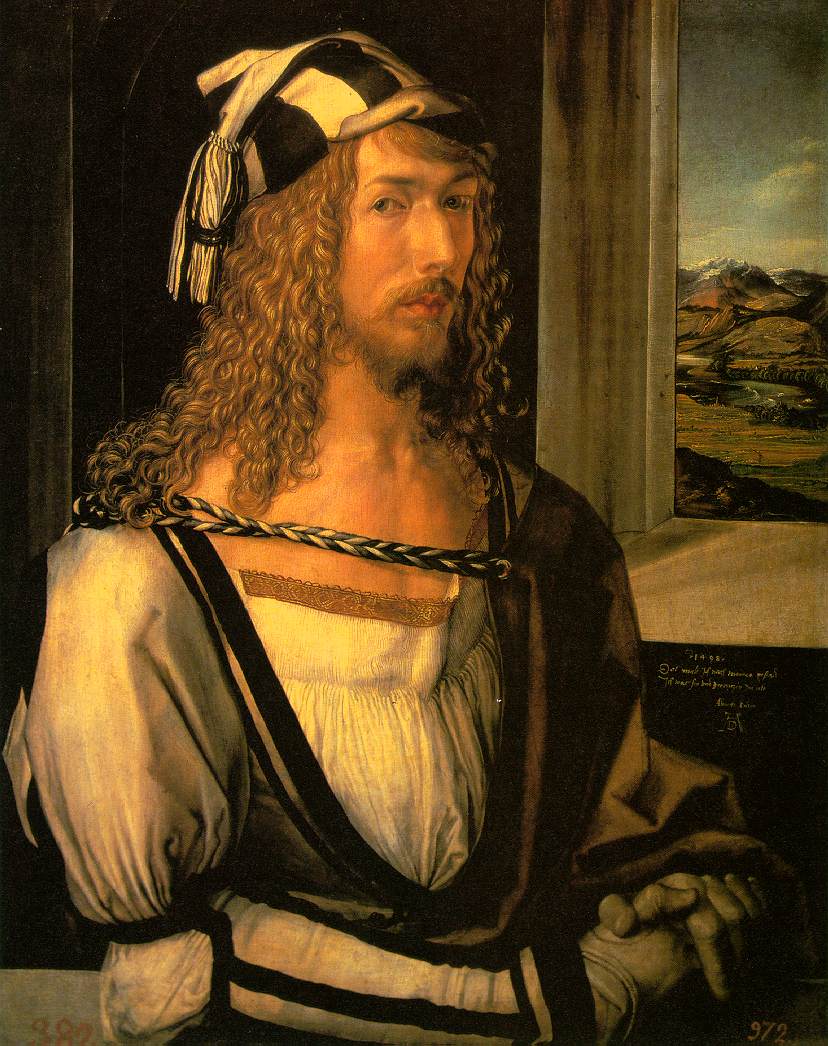
Similarly, large focal lengths (tele/long) make a flat photo. The sense of distance is lost and things start looking a little like renaissance paintings. Exactly because of this, they would work best for realistic (and better than realistic) portraits. Next time you happen to go to a beach where fashion photographers are shooting scantly clad models with perfect bodies, pay attention, if you can (male point of view), to the big telescopic lenses they use to photograph their subjects from a long distance.
A little attention to the focal length, combined with a little bit of walking closer or farther can sometimes be all that differentiates a photo that you want to keep looking at and a photo that you later get rid of.
Finally as a rule of thumb, a 50mm lens on a 35mm camera is roughly equivalent to what your eyes see in terms of distortion of distances. On film or full frame digital cameras, the 50mm lens also gives you the same field of view. For smaller frames, you have to go wider as the area in which the photo is captured is smaller. A little practice and comparison can give you a better idea. If you feel adventurous about getting really realistic with the focal length and distance to the subject, try to make one of these.
Nov 13, 2007
Camera Basics 3: Focal Length

Oct 31, 2007
Camera Basics 2: Simple Tricks
 Simplest (and most trivial) tips to take nice photos with almost any camera:
- Don't Loose Focus This one is the simplest since most cameras have an "auto-focus" feature. If you are using the manual focus you probably don't need to read this post! However, make sure that the camera does the right auto job. I only half rely on my Canon's auto-focus by fixing the focus point at the center, locking focus, and then moving the view to get the right composition. I would loose some focus precision in this process but it works much faster in low light.
- Loose the Shake Take a deep breath before pressing the shutter for the landscape shots or have a tripod keep the camera for you. In fast action situations, use a combination of higher shutter speeds with higher ISO sensitivity. Many cameras can use some sort of image stabilization technology these days which is a great help but will not substitute for a camera that is held by the earth herself.
- Use the Light This one is obvious but also the hardest of all: I am not sure why I included it here! I will talk more about this later but here is flash hint. In low light situations where you have to use the on-camera flash, simply use your free hand to put some semi-transparent material like a foggy plastic in front of the flash. It can diffuse the light. Yeah, you can use that beer glass too but the results might be too colorful to post the day after on your web albums.
Oct 15, 2007
Camera Basics 1: The Eye and the Camera

Scenario: You step out of your car. Take a deep breath and open your eyes to a beautiful scene. Reach for your camera. Take a picture, another one, another one... only to discover that the pictures are mere caricatures of what you are observing. You start fidgeting with your camera controls from Auto to Landscape to Manual. Take more shots and somehow none of them work? Getting the tripod out, changing the lens (if applicable) seems not to help either.
You just realized that the camera does not capture what your eyes see. There are two ways that the camera capture is different from seeing: technical and perceptual. For example take the auto-focus feature. Consider the almost seamless change of focus when we are trying to observe details in a landscape and compare that with the camera's slow and almost random hunting focus. The lenses in our eyes and in the camera can adjust their focus. On the technical side, the eyes may or may not beat the camera in speed and responsiveness. On the perception side, the brain does not really care about the focus and uses a mixture of available imagery, quick refocusing, and memory to form an overall sharp picture which is simply impossible for the camera to reproduce. Similarly, when it comes to seeing objects too small or too far, a simple tele or macro lens easily beats the lenses in your eyes.
To get a better understanding of differences between photography and seeing, it is helpful to compare photos [a physical representation of light entering the camera] and paintings [a physical representation of an idea of the lights entering the eyes]. What makes a photo like a painting and vice versa?
One of the major themes of this blog will be on how to actually represent your impression of a scene in a photograph by using camera, lighting, and post-processing.
Oct 14, 2007
Up from Down
It is time to start giving. I have accumulated enough over the last few years that starting a blog dedicated to photography ideas might finally be a good idea. Please drop me a few words if you have questions, suggestions, or criticism. I will listen.